Ready to talk?
Get in touch

Home Watch Service in Coral Gables, Miami: What Luxury Estate Owners Need to Know
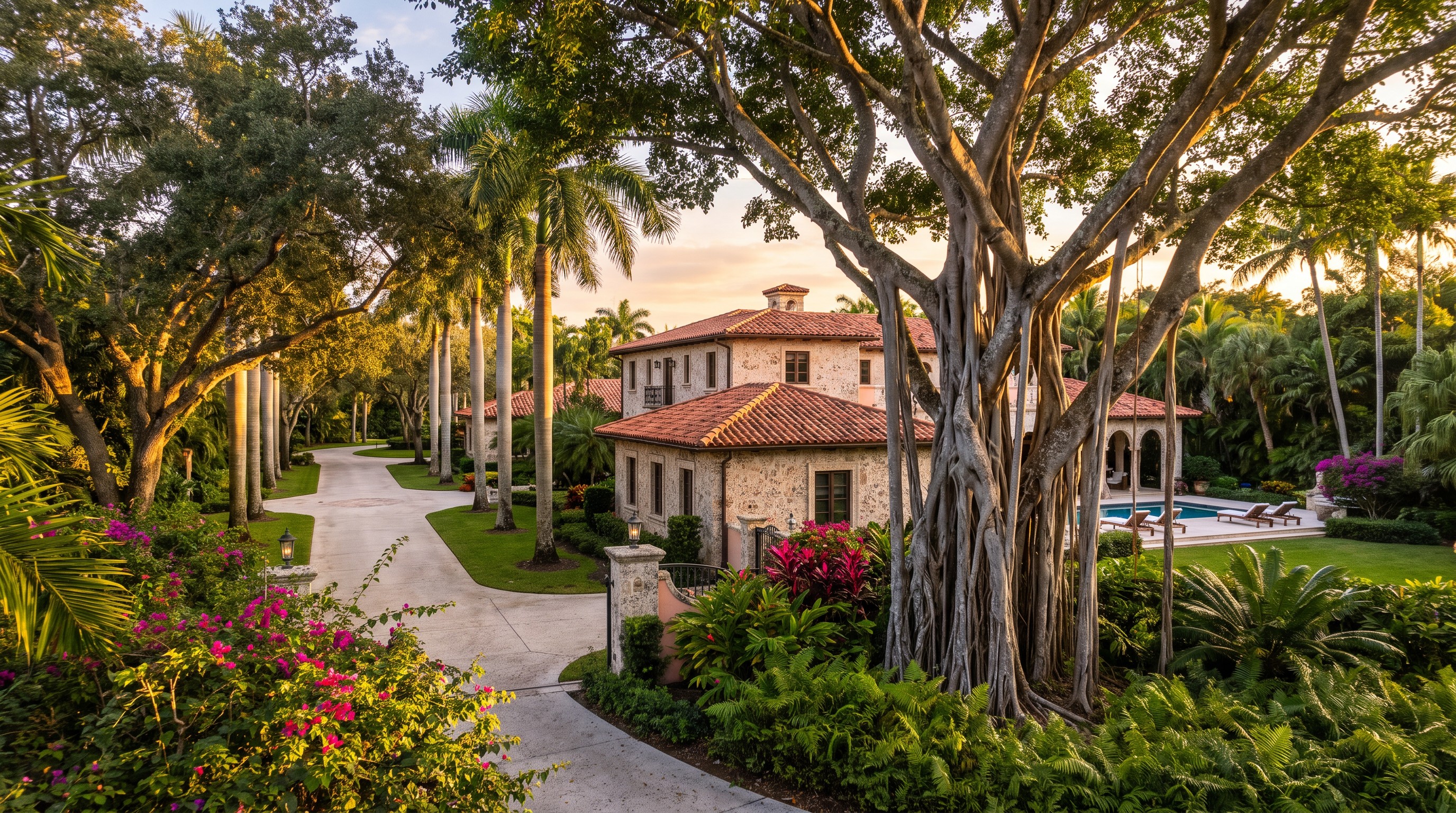

A reliable home watch service coral gables miami homeowners can trust isn't a luxury add-on for the city's historic estates — it's a structural necessity. Coral Gables is one of Miami's oldest and most architecturally distinct neighborhoods, filled with Mediterranean Revival mansions, coral rock facades, barrel-tile roofs, and lush, sprawling grounds. Those same features that make the neighborhood irresistible also make it uniquely vulnerable when a home sits empty for weeks or months at a time.
Owners who split their time between Coral Gables and homes up north, abroad, or elsewhere in Florida face a specific set of risks that generic property checks don't address. A standard "drive-by inspection" might confirm the lights are off and the lawn is cut. It won't catch a slow leak behind century-old plaster, a pool pump straining under salt air corrosion, or humidity creeping into a wine room full of irreplaceable art and antiques.
Coral Gables homes carry a different risk profile than newer construction in Brickell or Sunny Isles. Many estates here were built in the 1920s through 1950s, with original plumbing, aging electrical systems, and construction materials that behave differently in South Florida's heat and humidity than modern builds.
These homes also tend to sit on larger lots with mature landscaping, long gated driveways, and detached structures like guest houses or pool cabanas. Each additional structure and square foot of grounds is one more place where something can go wrong unnoticed — a fallen branch after a storm, a sprinkler head leaking into a foundation wall, or a gate motor failing in the humidity.
Owners comparing neighborhoods often ask how Coral Gables stacks up against Coconut Grove or Brickell for second-home ownership. The architecture is part of that answer — Coral Gables' historic character comes with maintenance considerations that newer, more compact properties simply don't have.
Barrel-tile roofs, stucco exteriors, and coral rock construction require a trained eye to monitor properly. A cracked tile after a storm can let water into the roof deck for weeks before a stain shows up on the ceiling below. Stucco that looks fine from the street can be hiding moisture intrusion at window frames or chimney flashing.
Older wood-framed windows and French doors, common in Coral Gables' historic districts, are also more prone to warping and seal failure in high humidity than modern impact glass. A home watch visit tuned to this kind of architecture checks these specific failure points, not just the obvious ones.
Interior finishes matter too. Original hardwood floors, plaster ceilings, and custom millwork don't tolerate humidity swings the way contemporary materials do. If air conditioning fails while a home sits vacant, the damage to irreplaceable architectural details can happen fast and quietly — which is exactly the scenario humidity damage in vacant Miami homes tends to follow.
Coral Gables lots are generous by Miami standards, and that space comes with upkeep demands most second-home owners underestimate. A pool left unchecked for even two weeks can develop algae, chemical imbalance, or equipment strain that turns into a costly repair.
Long, gated driveways and circular entries mean more pavement, more drainage points, and more opportunity for standing water after Miami's frequent afternoon storms. Mature oak and ficus canopies — a hallmark of the neighborhood's tree-lined streets — also mean more debris, more root intrusion risk near foundations, and more cleanup after hurricane season.
A proper inspection walks the full property, not just the front door. That includes checking pool chemistry and equipment, confirming irrigation systems are running correctly, inspecting fencing and gate hardware, and looking for any signs of water pooling near the foundation or garage.
Coral Gables estates are often filled with art collections, wine storage, custom furniture, and antiques collected over decades. These items don't just need a home that's secure — they need stable humidity, consistent temperature, and someone who notices when something's off before it becomes a claim.
This is where a focused home watch service goes further than a neighbor checking the mail. Trained visits include monitoring interior humidity levels, confirming HVAC systems are functioning properly, and documenting the condition of high-value rooms with photo reports sent directly to the owner.
Many Coral Gables owners also use concierge-level services for arrival preparation, so the home feels lived-in and ready the moment they land — lights on, air conditioning adjusted, fresh linens, and no musty smell from a closed-up house. Pairing home watch with arrival preparation for luxury Miami properties closes the gap between "checked on" and "ready to enjoy."
A thorough visit isn't a five-minute glance. It's a structured inspection designed around the specific risks of older, larger, high-value homes.
Inspectors typically check for signs of water intrusion around roof lines, windows, and doors; run faucets and flush toilets to keep plumbing seals from drying out; test pool equipment and chemical balance; inspect pest activity, especially around mature landscaping; and verify that security systems, gates, and exterior lighting are functioning. Every visit is documented with photos and a written report, so owners always know the exact condition of their property — a process explained in more detail in what a home watch service actually checks, room by room.
For estates with pools, guest houses, or extensive grounds, visit frequency and checklist depth should be customized rather than treated as one-size-fits-all. A 1920s Coral Gables estate on a half-acre lot needs a different inspection routine than a 1,200-square-foot condo in Sunny Isles.
1. Assuming a neighbor or house sitter can cover it: Casual arrangements don't include documented reports, trained eyes for architectural red flags, or accountability if something goes wrong.
2. Skipping pool and irrigation checks: These systems fail quietly and expensively when nobody is watching chemical balance or runtime schedules.
3. Ignoring humidity monitoring in historic construction: Older plaster, wood, and masonry react to moisture differently than modern materials, and damage often isn't visible until it's extensive.
4. Choosing the cheapest, generic inspection service: A provider unfamiliar with Mediterranean Revival architecture may miss the specific vulnerabilities these homes carry.
5. Waiting until hurricane season to prepare: Storm prep should be built into year-round oversight, not handled as a last-minute scramble.
6. Not documenting property condition consistently: Without regular photo reports, it's difficult to prove when damage occurred for insurance purposes.
According to the National Hurricane Center, South Florida's Atlantic hurricane season runs from June through November, which means roughly half of every year carries elevated storm risk for vacant estates. Consistent oversight during that window isn't optional for homes with significant exposure like Coral Gables' tree-lined, waterfront-adjacent streets.
Generic property check services — the kind that cover dozens of ZIP codes with the same checklist — rarely understand what makes Coral Gables different. Accreditation standards set by groups like the National Home Watch Association exist precisely because inconsistent, undocumented home checks leave owners exposed when something goes wrong.
A provider who regularly works in Coral Gables knows which streets flood first after heavy rain, which older homes are prone to specific roofing issues, and how to spot early signs of mold in a home's original construction — concerns detailed by the EPA's guidance on mold prevention in humid climates. That local familiarity, paired with structured reporting, is what separates a real home watch provider from a casual check-in.
Lux Key currently serves Surfside, Bal Harbour, Sunny Isles Beach, and Aventura, with Coral Gables among the neighborhoods next on the expansion map. The same proactive, documented approach used across those areas is built for the specific demands of Coral Gables' historic estates.
Owning a Mediterranean-style estate in Coral Gables means managing real architectural and landscaping risk every time you're away — roof tiles, pool equipment, humidity-sensitive interiors, and long gated grounds all need a trained eye, not a casual glance. Lux Key is ready to bring that same structured, photo-documented oversight to Coral Gables homeowners who want their property watched the way it deserves to be watched. Reach out through our contact page to discuss a custom inspection plan for your estate.
Coral Gables is an active expansion market for Lux Key, with the same inspection standards used across Aventura, Bal Harbour, Surfside, and Sunny Isles Beach. Reach out through the contact page to confirm current availability for your address.
Older Mediterranean-style estates have roofing materials, plumbing, and construction that react differently to humidity and storms than modern high-rise units. Inspections for these homes focus on barrel-tile roofs, original windows, plaster interiors, and larger grounds including pools and driveways.
Weekly visits are typically recommended for larger estates with pools, extensive landscaping, and high-value interiors, with increased frequency during hurricane season. Visit cadence should be customized based on property size, systems on-site, and how long the home will sit vacant.
Home watch providers monitor pool chemistry, equipment function, and landscaping condition, and coordinate with trusted vendors for repairs or service, but they are not a substitute for a focused pool company or landscaper. Vendor coordination is typically handled as part of broader property oversight.
Original plaster, wood millwork, and masonry in older Coral Gables estates absorb and hold moisture differently than modern materials, which makes them more prone to hidden mold and structural damage. Regular interior humidity checks catch problems before they become expensive repairs.