Ready to talk?
Get in touch

Coral Gables, Coconut Grove, or Brickell: Which Miami Neighborhood Is Best for a Second Home?


Miami's luxury real estate market saw median sale prices climb 8.4% year-over-year in 2025, with second-home buyers driving much of that demand. But choosing the right Miami second home neighborhood isn't just about price appreciation or ocean views—it's about lifestyle fit, property type, and how manageable your home will be when you're not there.
Coral Gables, Coconut Grove, and Brickell each offer a completely different second-home experience. One prioritizes European charm and gated estate living. Another delivers bohemian waterfront character with sailboats and artist studios. The third offers vertical luxury with concierge desks and rooftop pools. For absentee owners, these differences go beyond aesthetics—they determine maintenance load, HOA coverage, security infrastructure, and how much hands-on oversight your property will need while you're gone.
Here's what you need to know about each neighborhood before you buy, and why the right home watch strategy matters no matter which one you choose.
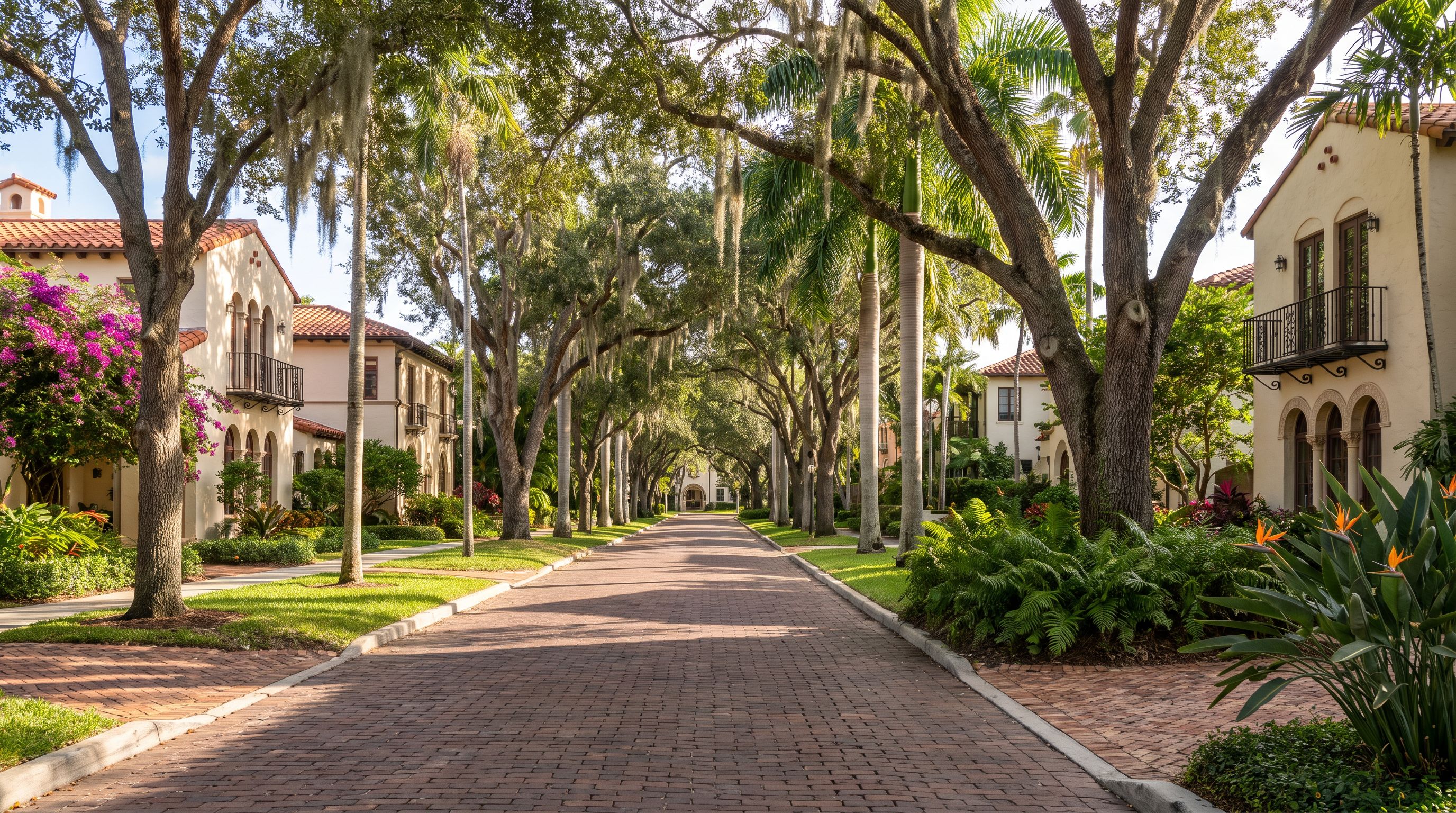
Coral Gables feels like a planned European village dropped into South Florida. Tree-lined streets, Spanish Revival architecture, strict zoning codes, and a historic aesthetic define the entire city. This is where you'll find grand single-family estates, gated communities with private golf courses, and a strong emphasis on preservation and curb appeal.
Most Coral Gables properties are detached homes ranging from $1.5 million for a smaller villa to $20 million+ for waterfront estates. You won't find many high-rises here—zoning restrictions limit vertical development. That means if you want a condo lifestyle with full-service amenities, Coral Gables isn't your first choice. But if you want a private home with a yard, pool, and established neighborhood character, it's hard to beat.
What it's like when you're not there: Single-family homes require active management. Even in gated communities with HOAs, the HOA typically covers gate staffing, landscaping for common areas, and road maintenance—not your pool, your roof, or your HVAC system. You're responsible for pest control, lawn care, irrigation, and monitoring for leaks or humidity issues. Many properties have no HOA at all, giving you full control but also full responsibility.
Coral Gables properties are beautiful, but they demand consistent oversight. Mature trees mean debris in gutters. Pools need weekly service even when not in use. Irrigation systems break. And because many homes sit empty for months, small problems—like a slow leak under a bathroom sink—can turn into expensive mold remediation projects.
Who it suits best: Buyers who want privacy, outdoor space, and a neighborhood that feels more like a European resort town than a South Florida condo corridor. Best for snowbirds and seasonal residents who plan to use the home regularly and appreciate architectural heritage. If you're only in Miami a few weeks per year and want minimal involvement, the maintenance load here may be more than you want to handle remotely.
Coconut Grove is Miami's oldest neighborhood, and it shows—in the best way. You'll find sailboats at marinas, peacocks wandering residential streets, banyan trees older than most buildings, and a mix of historic bungalows, modern waterfront estates, and mid-rise condos. The vibe is relaxed, artistic, and less polished than Coral Gables or Brickell.
Property types vary widely. Waterfront single-family homes can run $5 million to $30 million+, especially along Biscayne Bay with private docks. You'll also find 1960s-era ranch homes on tree-lined streets starting around $1.2 million, plus modern condos and townhomes in the $600K to $3 million range. It's one of the few Miami neighborhoods where you can still buy a character-filled older home and renovate it to your taste.
What it's like when you're not there: Coconut Grove's property diversity means maintenance needs vary significantly. Waterfront homes require dock maintenance, seawall inspections, and hurricane prep for boats and outdoor furniture. Older homes often have quirks—original terrazzo floors, jalousie windows, mid-century plumbing—that need experienced contractors, not just any handyman.
Condos in Coconut Grove tend to be smaller, boutique buildings rather than the mega-towers you'll find in Brickell. That means lower HOA fees but sometimes fewer on-site services. Some buildings have concierge and valet; others are more self-service. Check what's included before assuming the HOA will handle everything while you're gone.
For absentee homeowners, Coconut Grove's charm comes with responsibility. The tree canopy is beautiful until a storm drops branches on your roof. The laid-back vibe is appealing until you realize there's no 24-hour security gate. Second-home management in Coconut Grove requires local knowledge and proactive oversight—not just remote monitoring.
Who it suits best: Buyers who want waterfront access, neighborhood personality, and don't mind a bit of maintenance unpredictability. Ideal for owners who plan to spend significant time at the property, enjoy boating, and appreciate historic character over modern uniformity. Less ideal for buyers who want everything handled by an HOA and a concierge desk.
Brickell is Miami's vertical financial and residential core. Glass towers line Brickell Avenue, most built in the last 20 years, offering floor-to-ceiling windows, rooftop pools, state-of-the-art fitness centers, and full-service concierge desks. This is where you'll find the most modern, amenity-rich condo living in Miami—and the easiest lock-and-leave lifestyle for absentee owners.
Condos range from $400K for a one-bedroom to $5 million+ for penthouses with bay views. HOA fees are higher than Coral Gables or Coconut Grove—often $800 to $2,000+ per month—but they cover valet, concierge, pool and gym maintenance, building insurance, and sometimes even basic cable and internet. Single-family homes are nearly nonexistent in Brickell; this is condo territory.
What it's like when you're not there: Brickell condos are designed for absentee ownership. Building staff monitor lobbies, hallways, and amenities. Valet services can receive deliveries. Some buildings offer in-unit maintenance programs for an additional fee. But here's the catch: building management does not enter your unit to check for problems unless you arrange it.
A leaking refrigerator ice maker, a failed HVAC unit, or a toilet supply line that cracks—none of these will be caught by building staff until water starts seeping into the unit below. And by then, you're looking at insurance claims, unit repairs, and liability for damage to your neighbor's property. Even in a full-service building, your unit interior is your responsibility.
Pro tip: Many Brickell owners assume their HOA fee covers everything. It doesn't. You still need someone checking your unit regularly, coordinating vendor access for repairs, and ensuring your home is ready when you arrive. That's where professional home watch services fill the gap that building management doesn't cover.
Who it suits best: Buyers who prioritize convenience, modern finishes, and minimal hands-on property management. Perfect for international buyers, snowbirds who only visit a few times per year, and anyone who values amenities over outdoor space. Best choice if you want an urban, walkable lifestyle with restaurants and offices within walking distance.
Each neighborhood delivers a different lifestyle. But regardless of where you buy, absentee ownership requires the same core oversight: someone checking your property regularly, coordinating repairs before small issues become expensive ones, and ensuring your home is ready when you arrive.
Buying a Miami second home is exciting. Managing it from afar is where most owners run into trouble. Here are the most common mistakes we see across all three neighborhoods:
Assuming the HOA monitors your unit interior. Even in luxury Brickell towers, building management doesn't enter your condo to check for leaks, HVAC failures, or humidity issues. That's on you—or your home watch service.
Underestimating humidity and mold risk. Miami's climate doesn't care if you're in a $10 million Coral Gables estate or a $500K Brickell condo. If your AC fails while you're gone, mold can colonize within 48 hours. Regular monitoring is non-negotiable.
The best Miami neighborhood for a second home depends on your lifestyle priorities. Coral Gables suits buyers who want a quieter, tree-lined residential feel with strong property values and walkable amenities. Coconut Grove offers a relaxed waterfront character with a tight-knit community. Brickell is Miami's financial district — ultra-urban, walkable, and ideal for owners who want city convenience and high-rise living. All three are strong second-home markets with distinct personalities.
Brickell and Coconut Grove serve different buyers. Brickell is the choice for urban amenities, walkability, and proximity to Miami's business district — ideal for professionals who visit for work and want to be in the center of activity. Coconut Grove is better for owners who want a more relaxed, residential atmosphere with waterfront access and a slower pace. Both have strong luxury condo inventory; your preference for urban vs. village character is the deciding factor.
HOA fees in Coral Gables vary significantly by property type. Single-family homes in gated communities typically run $300 to $800 per month. Luxury condo buildings run $800 to $2,500 per month, depending on amenities — pools, concierge, valet, fitness centers, and building staff all affect fees. Coral Gables also has city-level architectural review requirements that can affect renovation costs and timelines for homeowners.
Miami's luxury real estate market has shown consistent appreciation, particularly in waterfront and high-demand urban neighborhoods. Second homes in Coral Gables, Coconut Grove, and Brickell have generally held value and appreciated over the past decade. Whether it's a 'good investment' in 2026 depends on purchase price, carrying costs, usage plans, and market conditions at the time of purchase — consult a Miami real estate attorney and advisor for current-specific guidance.
Yes. Even in a well-managed Brickell condo with 24-hour concierge and security, your individual unit is your responsibility. Building staff manage common areas, not interior systems. If your AC fails, a pipe leaks, or humidity causes mold growth inside your unit while you're away, the building's team has no obligation to catch it. Home watch provides dedicated interior monitoring — every room, every system — that building management simply doesn't cover.