Ready to talk?
Get in touch

The Complete Home Watch Checklist for Miami Second Homes
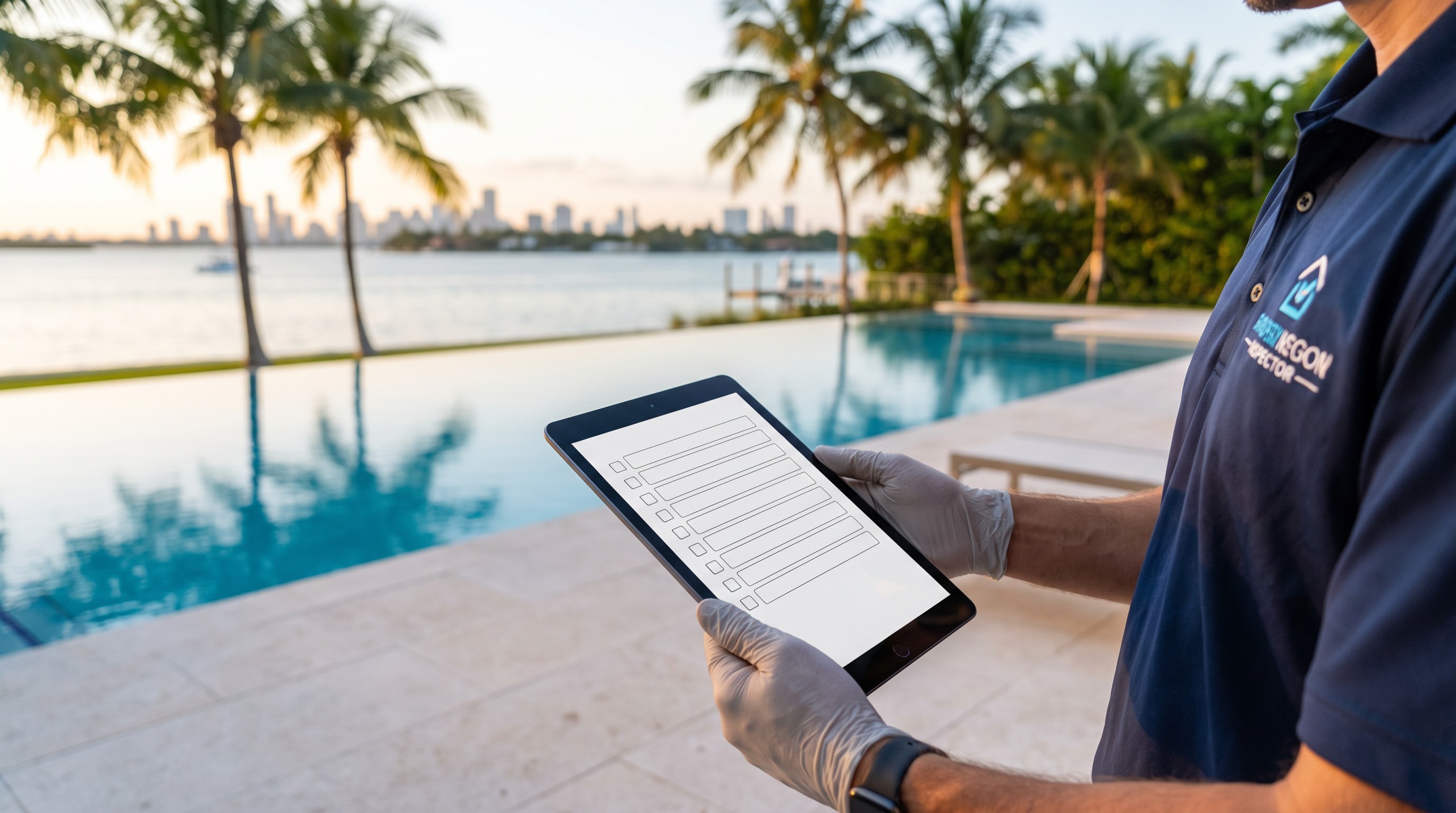

A thorough home watch checklist covers more than 40 individual checkpoints inside and outside a property, and in a climate like Miami's, skipping even a handful of them can turn a vacant home into an expensive problem within weeks. Humidity creeps in faster than most owners expect. Salt air corrodes fixtures. A single missed leak under a sink can warp flooring before anyone notices. If you own a second home in Aventura, Bal Harbour, Surfside, Sunny Isles, or North Miami Beach and you're not physically present to catch these issues early, you need to know exactly what a proper inspection should include — and why so many DIY checklists fall short.
This guide breaks down every section of a professional home watch checklist, explains what each check protects against, and shows where Miami's specific climate risks demand extra attention that generic checklists from other markets simply don't cover.
A real home watch checklist is built around three goals: catching small problems before they become large ones, confirming the home is secure, and documenting everything with photos so the owner has a clear record of each visit. Anything less than that is a quick walk-through, not an inspection.
Every visit should move through the property in a consistent sequence — exterior first, then interior, then systems — so nothing gets skipped out of habit or rush. Consistency is what separates a checklist that actually protects a property from one that just looks thorough on paper.
Tip: Ask any provider you're considering to show you a sample report before you hire them. If it doesn't include timestamped photos of specific checkpoints, it isn't detailed enough for a luxury property.
The exterior of the home takes the brunt of Miami's weather, so this is where a checklist earns its keep. Roof and gutters get checked for debris, loose tiles, and standing water, all of which signal drainage problems before they reach the interior. Windows, doors, and seals are inspected for gaps or cracked caulking that let humidity and pests inside.
Pool equipment, if present, gets a visual check for proper water level and functioning pumps. Landscaping and irrigation systems are reviewed to confirm sprinklers are running on schedule and nothing has overgrown onto siding or screens. Driveways, walkways, and exterior lighting are checked for damage, debris, or burned-out fixtures that signal a vacant home to anyone watching the street.
Fencing, gates, and perimeter security — including cameras and motion lighting — are tested to confirm they're operational. Garage doors and exterior access points are physically checked, not just assumed locked, since a faulty sensor can leave a door unsecured without any visible sign from the street.
Inside the home, the checklist shifts toward the systems that quietly fail when nobody's watching. Every faucet should be run briefly to prevent dry P-traps, which allow sewer gas to back into the home — a common and preventable issue in vacant properties. Toilets get flushed for the same reason, and water heaters are checked for leaks or corrosion around fittings.
HVAC systems are inspected and set to maintain humidity control even when the home is unoccupied, since air conditioning in South Florida does double duty as a mold prevention tool. Electrical panels are checked for tripped breakers, and smoke and carbon monoxide detectors are tested to confirm batteries haven't died.
Mail, packages, and deliveries are collected and logged so nothing piles up at the front door — a visible sign to opportunists that a home sits empty. Refrigerators and freezers are checked for proper operation, and any signs of pests, water staining on ceilings or walls, or musty odors are documented immediately with photos.
Generic home watch checklists written for other climates miss the checkpoints that matter most in South Florida. Humidity and mold monitoring deserve their own focused line items, not a footnote, because Florida's climate pushes indoor humidity above safe thresholds within days of an air conditioning failure. Our mold and humidity monitoring service uses moisture readings at every visit, not just a visual glance, to catch problems before they're visible.
Salt air corrosion is another Miami-specific risk that generic checklists ignore entirely. Metal fixtures, railings, and outdoor hardware near the coast corrode faster than inland properties, and a checklist that doesn't account for this will miss early rust before it spreads.
Hurricane season adds an entire category most checklists outside Florida don't need. Storm shutters, generator fuel levels, outdoor furniture securing, and drainage around the property all need pre-storm and post-storm checkpoints. Our hurricane preparedness service builds this into the seasonal schedule automatically rather than treating it as an emergency add-on.
Note: According to the National Hurricane Center, South Florida sees heightened storm activity from June through November, which is exactly when absentee homeowners need the most frequent, most detailed checks.
A checklist is only as good as the reporting that follows it. After every visit, homeowners should receive a photo report documenting each checkpoint, flagged issues, and action taken — not a vague text message saying "all good." Our Miami Home Watch service sends detailed photo reports after every single inspection so you have a timestamped record of your property's condition.
If something does need attention — a leaking water heater, a tripped breaker, storm damage — the report should include next steps and, where appropriate, coordination with a trusted vendor. Our vendor management service handles that coordination directly so you're never the one fielding calls from a repair technician while sitting in another state or country.
Reports should be consistent in format every time, searchable by date, and detailed enough that you could reconstruct exactly what was checked without being on the property yourself.
1. Relying on neighbors or friends: A well-meaning neighbor isn't trained to spot early mold signs, corroded fittings, or electrical issues, and they have no obligation to document what they see.
2. Skipping water system checks: Dry P-traps and stagnant pipes cause odors and sewer gas intrusion that's entirely preventable with a two-minute faucet run.
3. Ignoring humidity until it's visible: By the time mold is visible on a wall, the problem has usually existed inside the wall cavity for weeks.
4. Treating hurricane prep as a one-time task: Storm readiness needs rechecking before every named storm, not just once at the start of the season.
5. Using a checklist with no photo documentation: Without visual proof, you have no way to verify what was actually inspected or dispute a claim if damage occurs.
6. Checking the interior but not the exterior: Exterior issues — roof damage, failed drainage, broken fencing — often cause the interior problems that get discovered too late.
If you're managing a second home from out of state or overseas, you shouldn't have to wonder whether your water heater is leaking, your roof is holding up after last week's storm, or your mail is piling up at the front door. Lux Key Concierge builds every visit around a documented, photo-backed home watch checklist covering exterior, interior, humidity, and storm readiness — tailored to Miami's specific risks, not a generic template built for another climate.
Contact us today for a free quote and see exactly what a properly documented inspection looks like for your property.
A complete checklist covers exterior inspection (roof, windows, pool equipment, landscaping, security), interior inspection (water systems, HVAC, electrical, smoke detectors), mail and package collection, and photo documentation of every checkpoint on every visit.
Weekly visits are standard for most second homes, with bi-weekly options for lower-risk properties and more frequent checks recommended during hurricane season or after severe weather events.
A neighbor can glance at a home, but without training in moisture detection, electrical systems, and storm damage assessment, small issues like dry P-traps or early mold growth typically go unnoticed until they're expensive to fix.
Yes, a properly built checklist for Florida properties includes storm shutter checks, generator fuel levels, outdoor furniture securing, and drainage review before and after named storms, which is distinct from year-round inspection items.
The issue gets documented with photos immediately, the homeowner is notified, and if repair is needed, a trusted vendor can be coordinated on the owner's behalf so the problem is addressed without the owner needing to manage it remotely.